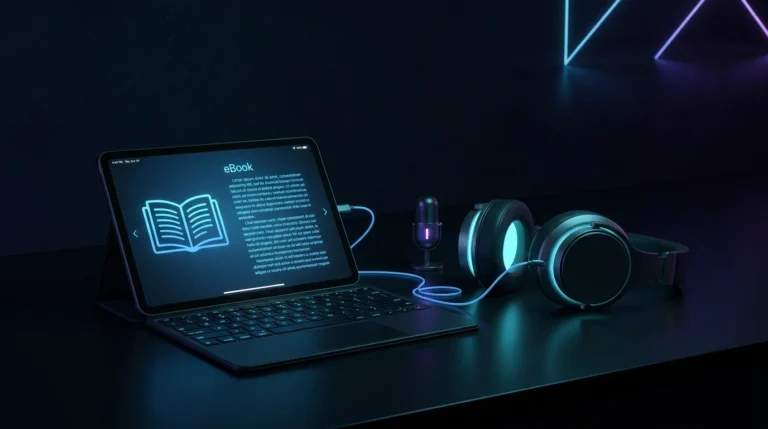

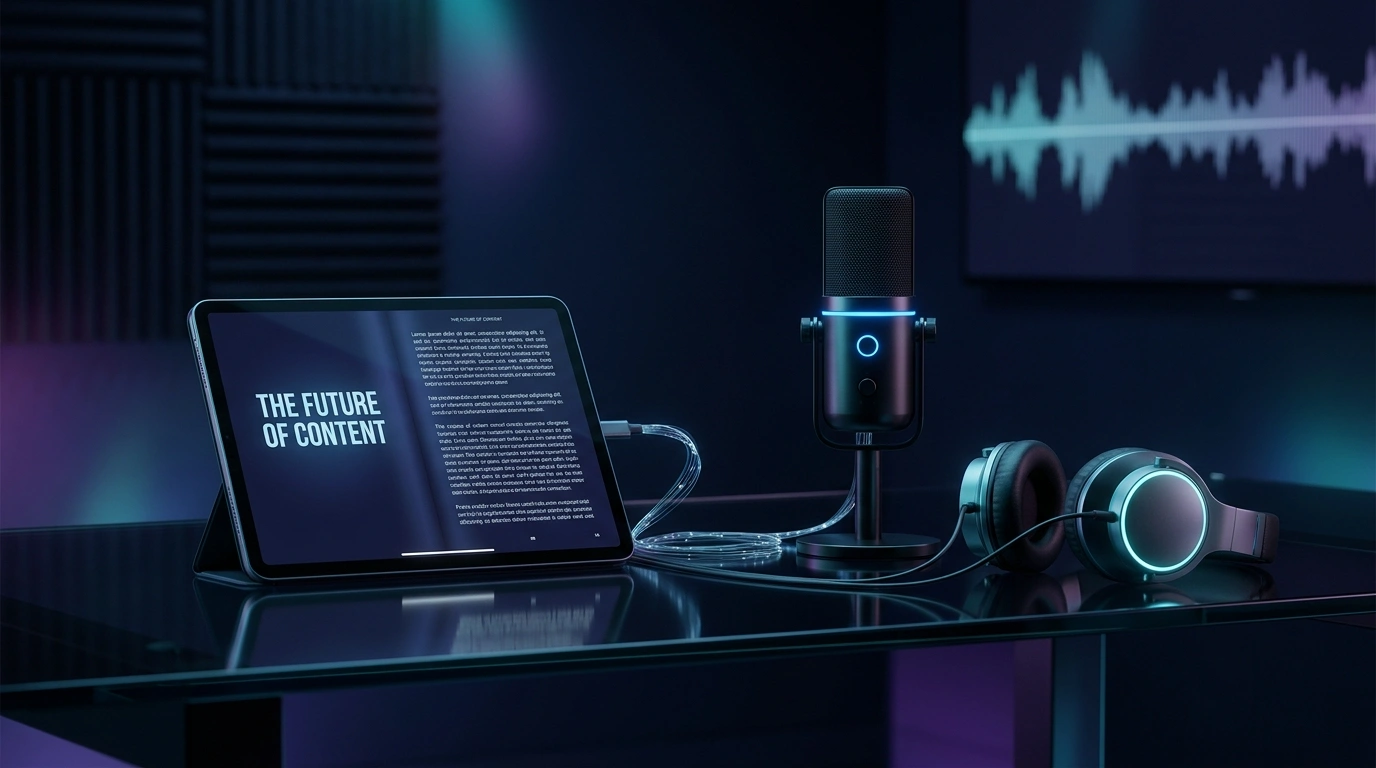
More people are listening to books than ever before, and that shift is changing how authors and businesses think about their content. If you already have an eBook, you might be asking yourself whether it’s worth the time and cost to turn your eBook into an audiobook, or whether that’s just one more task on an already long list.
It’s a fair question. Audiobook production takes planning, some budget, and technical steps that most authors and business owners have never handled before. But the audience is real and growing fast, and for many books, converting to audio is one of the simplest ways to reach readers who would otherwise never find you.
This guide covers what actually happens when you turn your eBook into an audiobook, the benefits and trade-offs, a practical step-by-step process, and how to tell if your book is a good fit before you invest in production.
Why Audiobooks Are Growing So Fast
Audiobooks are no longer a small side category in publishing. They have become one of the fastest-growing ways people consume books.
A few numbers help explain why so many authors and businesses are choosing to turn their eBook into an audiobook right now:
- US audiobook sales revenue hit $2.43 billion in 2025, up 9% from the year before, according to the Audio Publishers Association.
- More than half of American adults, an estimated 157 million people, have listened to an audiobook at least once.
- Listeners consistently point to one main reason for choosing audio: they can multitask. Cooking, commuting, exercising, and doing chores all become moments to consume content.
- Fiction still leads in total sales, but nonfiction, business, and self-help titles make up a large and steady share of the market.
This isn’t a short-term trend. It reflects a real change in how people fit books into busy lives. If your content already reaches readers as an eBook, an audiobook version gives you a second doorway into that same audience, plus access to people who simply prefer to listen.
What Does It Actually Mean to Turn Your eBook Into an Audiobook?
Turning your eBook into an audiobook is more than reading the text into a microphone. It’s a small production project with its own steps, decisions, and quality standards.
Listening Is a Different Experience Than Reading
A reader can skim a paragraph, flip back a page, or study a table for as long as they like. A listener can’t do any of that as easily. They experience your book in a straight line, at whatever pace the narrator sets.
Because of this, sentences that read perfectly fine on a page can sound awkward out loud. Long lists, footnotes, and dense data don’t always translate well to audio without some adjustment. This is one reason manuscripts often need a light editing pass before recording, not a rewrite, just small changes so the book flows naturally when spoken.
It’s a Production Process, Not Just a Recording
Getting from a finished eBook to a finished audiobook usually involves preparing the manuscript, choosing a narrator, recording in a proper environment, editing and mastering the audio, and then publishing it to the platforms where people actually listen. Skipping steps, such as using low-quality recording equipment or an untrained narrator, tends to show up quickly in listener reviews.
Is Your eBook a Good Candidate for Audiobook Conversion?
Not every book makes the jump to audio equally well. Before you commit budget to converting your eBook, look for these signs.
Your eBook is likely a strong candidate if:
- It already has steady downloads, sales, or an engaged audience
- It’s written in a clear, conversational style, which is common for memoirs, business advice, self-help, and narrative nonfiction
- It doesn’t depend heavily on charts, footnotes, or reference tables that only work visually
- Your target audience already listens to podcasts or audiobooks regularly
- You want a long-term asset for marketing or lead generation, not just a single sale
If your book leans heavily on visuals or technical references, conversion is still possible. It just needs more thought during manuscript preparation so the audio version still makes sense without pictures in front of the listener.
The Real Benefits of Turning Your eBook Into an Audiobook
A Bigger Audience
Not everyone who would enjoy your book is a reader. Some people are audiobook-only consumers, and no amount of eBook marketing will reach them. Producing an audio version opens the door to that entire group.
A New Revenue Stream From Work You Already Did
You’ve already paid for the writing, editing, and cover design. An audiobook adds another product built on that same investment, without starting the creative process from scratch.
Stronger Brand Authority
For business owners, consultants, and coaches, a professionally produced audiobook signals credibility. A prospective client researching you online sees a polished, multi-format body of work instead of a single PDF download.
Better Access for More People
Some readers deal with visual impairment, dyslexia, or simply prefer audio for other reasons. An audiobook version makes your content usable for people who might otherwise skip your eBook entirely.
Here’s a quick side-by-side look at how the two formats typically compare:
| Aspect | eBook | Audiobook |
|---|---|---|
| Best for | Visual learners, quick reference | Commuters, multitaskers, busy professionals |
| How it’s used | Read at your own pace, highlight, search | Listened to while driving, exercising, or working |
| Production focus | Formatting, editing, cover design | Narration, recording, sound editing |
| Common platforms | Kindle, Apple Books, Google Play | Audible, Apple Books, Google Play, Spotify |
| Works best for | Reference guides, visual content | Stories, business advice, personal development |
What to Consider Before You Convert Your eBook
Time and Production Costs
Audiobook production usually costs more than eBook publishing, mainly because of narration and audio editing. Costs scale with the length of your book, so a short guide costs less to produce than a full-length memoir. Getting a clear quote upfront helps you budget properly instead of guessing.
Choosing the Right Narrator
This decision affects your audiobook more than almost any other. Interestingly, recent industry surveys show that listener interest in AI-narrated audiobooks has actually gone down over the past year, even as more AI-narrated titles get published. Most listeners still prefer a trained human voice, which matters even more if you’re using the audiobook to build trust in a business or personal brand.
Editing, Mastering, and Quality Control
Retail platforms have technical requirements for audio quality, and listeners notice sloppy editing fast. Background noise, inconsistent volume, or mispronounced words can hurt reviews and refund rates. This step is worth doing properly rather than rushing.
How to Turn Your eBook Into an Audiobook: A Step-by-Step Guide
Here’s what the process typically looks like from start to finish:
- Prepare your manuscript. Review the text for anything that reads oddly out loud, and add pronunciation notes for unusual names or terms. Softlogics LLC’s eBook publishing team often handles this stage as part of getting a manuscript ready for a new format.
- Choose your narration style. Decide between a professional human narrator or an AI-generated voice, based on your budget, timeline, and how personal the content needs to feel.
- Cast or select your narrator. Listen to samples or auditions and pick a voice that matches your book’s tone and audience.
- Record in a proper environment. Professional recording avoids background noise and inconsistent sound quality that listeners notice immediately.
- Edit and master the audio. Clean up pacing, remove mistakes, and balance sound levels so the whole book sounds consistent.
- Register and prepare metadata. This includes audio ISBNs, cover art sized for audio platforms, and a description written for listeners.
- Distribute to platforms. Audible, Apple Books, Google Play, and Spotify are the major destinations. Many independent authors start with Amazon’s ACX platform, though publishers and larger catalogs often distribute more widely.
Full-service providers, including Softlogics LLC’s audiobook publishing team, typically manage most of these steps together, so you’re not coordinating narrators, engineers, and platforms separately on your own.
DIY vs. Hiring Professionals: Which Is Right for You?
Some authors record their own audiobooks, especially for short guides or personal projects. Others prefer to hand the whole process to a team. Here’s how the two approaches typically compare:
| Factor | Doing It Yourself | Working With Professionals |
|---|---|---|
| Upfront cost | Lower sticker price, but equipment and your own time add up | Clear quote upfront, no equipment to buy |
| Time investment | Weeks or months learning tools and fixing mistakes | Managed timeline with a defined turnaround |
| Audio quality | Depends heavily on your equipment and experience | Studio-level narration and sound editing |
| Distribution | You manage uploads, metadata, and ISBNs yourself | Handled for you across major platforms |
| Ongoing support | You’re on your own for future updates | Support available for revisions and new editions |
Neither option is automatically wrong. A short internal training guide might be fine as a DIY project. A book meant to represent your business or personal brand to the public usually benefits from a professional standard of production.
How to Market Your Audiobook Once It’s Live
Publishing an audiobook is only half the job. Without promotion, even a well-produced audiobook can sit unnoticed among hundreds of thousands of other titles.
A few approaches that tend to work well:
- Cross-promote the audiobook on your existing eBook’s sales page and website
- Share short audio clips or narrator samples on social media
- Email your existing subscriber list with a direct link to the audiobook
- Encourage early listeners to leave reviews on Audible or Apple Books
- Run targeted ads to people who already follow similar authors or business topics
This is where dedicated support helps. Softlogics LLC’s eBook and audiobook marketing services build a promotion plan around your specific audience and goals, rather than relying on generic social posts and hoping for the best.
How Softlogics LLC Supports Your eBook to Audiobook Journey
Turning an eBook into an audiobook touches several different skills at once: writing, editing, audio production, design, and marketing. Softlogics LLC works as a full-service digital solutions company, which means these pieces can be handled under one roof instead of across five different freelancers.
Depending on where you are in the process, this can include:
- eBook Publishing, Editing, and Ghostwriting to get your manuscript polished and ready before narration begins
- Audiobook Publishing to handle narration, recording, mastering, and distribution to major platforms
- eBook and Audiobook Marketing to build visibility through SEO, PPC, and social media campaigns
- Graphic Design & Branding for audiobook cover art and promotional graphics that match your existing brand
- Web Design & Development to create or update a landing page where visitors can find and buy both formats
- Digital Marketing to keep driving traffic and downloads long after launch day
Many businesses that come to Softlogics LLC for an audiobook end up using more than one service, simply because the pieces naturally connect. A polished website, consistent branding, and a coordinated marketing push tend to perform better together than any one piece on its own.
If you’re exploring this path, working with Softlogics LLC means one team stays accountable for the whole journey, not just one slice of it.
A Real-World Example: From Business eBook to Audiobook
Consider a business coach who published a short eBook on leadership habits a few years ago. It sold steadily but slowly, mostly to people who found it through a Google search.
After deciding to turn the eBook into an audiobook, the coach worked with a production team to prepare the manuscript, record it with a professional narrator, and distribute it to Audible and Apple Books. At the same time, the coach updated their website with a dedicated page for both formats, refreshed the cover design to work across print, digital, and audio, and ran a short social media and email campaign around the launch.
Within a few months, the audiobook was reaching listeners who had never engaged with the written version, including people who found it through Audible’s own recommendation system rather than a search engine. The eBook itself also saw a small sales bump, likely from the renewed attention around the launch.
This kind of result is common. An audiobook rarely replaces eBook sales. It usually adds a new audience on top of the one you already have.
Common Mistakes to Avoid When Converting Your eBook
- Skipping manuscript prep. Recording straight from an unedited eBook file often means fixing avoidable issues after the fact.
- Choosing a narrator based on price alone. A mismatched voice can hurt listener trust more than it saves in cost.
- Ignoring metadata and cover design. A generic description or mismatched cover makes your audiobook easy to scroll past.
- Publishing without a promotion plan. Even great audiobooks need a push to get noticed in a crowded catalog.
- Treating it as a one-time task. Reviews, updates, and continued promotion all affect long-term sales.
Final Thoughts: Should You Make the Leap?
Deciding whether to turn your eBook into an audiobook comes down to a simple question: does your book have an audience that would rather listen than read? For many business guides, memoirs, and self-help titles, the answer is yes, and the growing audiobook market backs that up.
The process takes planning and investment, but it doesn’t have to be complicated. Working with a team that handles eBook publishing, audiobook production, and marketing together removes most of the guesswork.
If you’re ready to explore whether your book is a good fit, Softlogics LLC offers a free consultation to walk through your options and give you a realistic sense of cost and timeline before you commit to anything. Contact our team when you’re ready to take the next step.
FAQs – eBook Into an Audiobook
How long does it take to turn an eBook into an audiobook?
Most audiobooks take four to eight weeks from start to finish, depending on the length of the book, narrator availability, and how much editing the manuscript needs before recording begins.
How much does it cost to convert an eBook into an audiobook?
Cost depends mainly on book length and narrator experience, since audiobooks are usually priced per finished hour of audio. Getting a clear quote based on your specific manuscript is more reliable than relying on general estimates.
Should I use a human narrator or an AI-generated voice?
Human narration remains the preference for most listeners, especially for content meant to build trust in a business or personal brand. AI narration can work for lower-budget or highly technical projects where tone matters less.
Where can I sell or distribute my finished audiobook?
Audible, Apple Books, Google Play, and Spotify are the largest platforms. Most professional production services handle distribution to these platforms as part of the process.
Can any type of book become a good audiobook?
Most books can be converted, but titles with a conversational style, like memoirs, business advice, and self-help, tend to translate to audio more naturally than reference-heavy or highly visual books.
Do I need to edit my eBook before recording it?
Usually yes, though the changes are typically minor. Manuscripts often need small adjustments so sentences flow naturally when read aloud, rather than a full rewrite.
Can Softlogics LLC handle both the eBook and audiobook versions of my book?
Yes. Softlogics LLC offers eBook publishing, editing, and ghostwriting alongside audiobook production and marketing, so both formats can be managed by one team from start to finish.