

High-converting eCommerce websites combine fast load times, intuitive UI/UX design, mobile optimization, and trust-building elements like reviews and secure checkout. The best stores make it effortless for visitors to find products, trust the brand, and complete their purchase without friction.
Two online stores can sell the exact same product. One generates steady sales every day. The other barely gets any. What’s the difference? Almost always, it comes down to eCommerce website design.
Design is not just about looking good. It shapes how users feel when they land on your store, how easily they can find what they need, and whether they trust you enough to enter their card details. A well-designed eCommerce store removes every possible obstacle between the visitor and the purchase.
This post breaks down exactly what separates high-converting stores from underperforming ones. You’ll learn what design elements matter most, how platform choice affects your results, and how working with the right eCommerce web design partner can transform your online business.
What Are the Key Elements of High-Converting eCommerce Website Design?
Not every design decision has an equal impact on sales. Some elements have a direct, measurable effect on conversions. Others support the overall experience. Here are the ones that matter most.
How Does User Experience and UI/UX Design Affect eCommerce Conversions?
UI/UX design determines how easy and enjoyable your store is to use. UI (user interface) covers the visual layer: colors, typography, buttons, and layout. UX (user experience) covers how everything works together: navigation flow, search functionality, and how fast users can go from landing page to checkout.
Poor UI/UX design frustrates users. They leave. Good UI/UX design keeps users engaged and guides them naturally toward buying.
Key UI/UX principles for eCommerce include:
- Clear navigation: Categories should be easy to find and logically organized
- Visible search bar: Especially important for stores with large catalogs
- Consistent design language: Fonts, colors, and button styles should be uniform throughout
- Intuitive product filtering: Let users sort by price, size, color, rating, and other relevant attributes
- Strong calls to action: “Add to Cart” and “Buy Now” buttons should stand out visually
According to the Baymard Institute, poor UX design is one of the top reasons shoppers abandon eCommerce stores before purchasing.
Why Does Mobile Optimization Matter for eCommerce Website Design?
Mobile commerce accounts for a significant share of global online sales. According to Statista, mobile devices generated approximately 60% of global website traffic as of 2023. If your store does not perform well on a phone or tablet, you are losing a large portion of potential customers.
Mobile optimization means more than just making your site “fit” on a smaller screen. It means:
- Touch-friendly buttons and tap targets
- Fast load times on mobile networks
- Simplified navigation menus
- Product images that scale correctly
- A checkout process designed for mobile users
Responsive eCommerce web design ensures your store automatically adapts to any screen size without sacrificing usability.
How Does Site Speed and Performance Impact eCommerce Sales?
Speed is a conversion factor, not just a technical concern. Google research shows that as page load time increases from one second to three seconds, the probability of a user bouncing increases by 32%.
For eCommerce stores, every extra second of load time means fewer completed purchases. Customers expect fast experiences. If your store is slow, they will leave and buy from a competitor.
To improve site speed, high-converting stores typically focus on:
- Optimized and compressed product images
- Clean, minimal code without unnecessary plugins
- A reliable hosting environment
- Browser caching and content delivery networks (CDNs)
- Minimal use of heavy scripts and animations
How Does Design Directly Impact eCommerce Conversions?
Good design creates trust. Trust leads to purchases. Here is how specific design choices translate directly into conversion rate improvements.
What Are the Most Effective Trust Signals and Social Proof Elements for eCommerce Stores?
First-time visitors do not know your brand. They need reassurance before they hand over their payment information. Trust signals are design and content elements that tell visitors your store is legitimate and your products deliver on their promises.
The most effective trust signals for eCommerce include:
- Customer reviews and star ratings: Displayed clearly on product pages
- User-generated photos: Real customers using your products
- Security badges: SSL certificates, payment processor logos (Visa, Mastercard, PayPal)
- Clear return and refund policies: Visible without digging through menus
- Contact information: A phone number or live chat option signals legitimacy
According to BrightLocal’s 2023 Consumer Review Survey, 98% of consumers read online reviews before making a purchase decision. If your product pages have no social proof, conversions will suffer.
What Makes a Product Page High-Converting in eCommerce Web Design?
The product page is where the buying decision happens. Every element on it either supports or undermines that decision.
High-converting product pages include:
- Multiple high-quality images: Show the product from different angles, in use, and with size references
- Clear product titles and descriptions: Specific, benefit-focused copy that answers common questions
- Prominent pricing: No hidden fees, clear discounts where applicable
- Stock availability indicators: “Only 3 left” creates urgency
- Clear add-to-cart buttons: Large, high-contrast, and above the fold
- Related product suggestions: Encourages upselling and longer browsing sessions
Poor product pages with low-quality images, vague descriptions, or confusing pricing structures cause hesitation. Hesitation kills conversions.
How Can eCommerce Checkout Design Reduce Cart Abandonment?
Cart abandonment is one of the biggest challenges in eCommerce. The Baymard Institute’s research found that the average cart abandonment rate is nearly 70%. A significant portion of that abandonment happens because of checkout design problems.
Common checkout design mistakes include:
- Requiring account creation before purchase
- Too many form fields
- Unexpected shipping costs appearing at the final step
- Limited payment options
- Poor mobile checkout experience
High-converting stores use:
- Guest checkout options: Remove the barrier of forced account creation
- Progress indicators: Show users how many steps remain
- Autofill and address lookup: Speed up form completion
- Multiple payment methods: Credit cards, PayPal, Apple Pay, and buy-now-pay-later options
- Clear order summaries: Users should always see what they are buying and what it costs
Platform Matters: Shopify vs. WooCommerce
Your eCommerce platform is the foundation everything else is built on. The two most popular options are Shopify and WooCommerce, and the right choice depends on your business needs.
| Feature | Shopify | WooCommerce |
|---|---|---|
| Ease of use | Very easy, hosted solution | Requires more technical setup |
| Customization | Theme and app-based | Highly customizable via code |
| Hosting | Included | Self-hosted (you manage it) |
| Scalability | Excellent for most stores | Scales well with proper setup |
| Cost | Monthly subscription | Plugin/hosting costs vary |
| Best for | Faster launches, less tech overhead | Maximum flexibility and control |
Shopify is typically better for businesses that want to launch quickly, minimize technical management, and scale reliably. WooCommerce gives more flexibility for businesses with specific custom requirements. For a deeper comparison, read the Softlogics LLC Shopify vs. WooCommerce guide to see which platform fits your situation.
Shopify eCommerce Development for High-Converting Stores
Shopify has become one of the most trusted eCommerce platforms for businesses of all sizes. Its clean architecture, reliable hosting, and extensive app ecosystem make it an excellent foundation for high-converting stores.
Softlogics LLC offers professional Shopify website development services that go well beyond basic setup. The Softlogics team builds custom Shopify stores designed around your brand, your products, and your target customers.
Shopify development services from Softlogics LLC include:
- Custom Shopify store design: Unique storefront layouts built to match your brand identity
- Shopify theme customization: Modifying existing themes for better performance and conversion
- Shopify store redesign: Modernizing outdated stores with improved navigation, visuals, and UX
- App and third-party integrations: Connecting payment platforms, CRM tools, shipping services, and analytics
- Ongoing store management and support: Handling updates, product uploads, and performance improvements
Softlogics LLC has built Shopify stores for fashion brands, beauty and skincare companies, jewelry lines, electronics retailers, home decor businesses, and B2B suppliers. Each store is tailored to how buyers in that specific industry shop.
Most Shopify store projects are completed within one to three weeks, and every store is built to be fully mobile-responsive from day one.
Professional eCommerce Web Design Services
A great product catalog is not enough. The design, structure, and performance of your online store determines whether visitors buy or leave.
Softlogics LLC provides full-service eCommerce web design solutions for businesses that want their online store to do more than just exist. The goal is to build stores that convert visitors into buyers and buyers into repeat customers.
eCommerce web design services from Softlogics LLC cover:
- Custom eCommerce website design: Storefronts built around your brand, products, and customer behavior
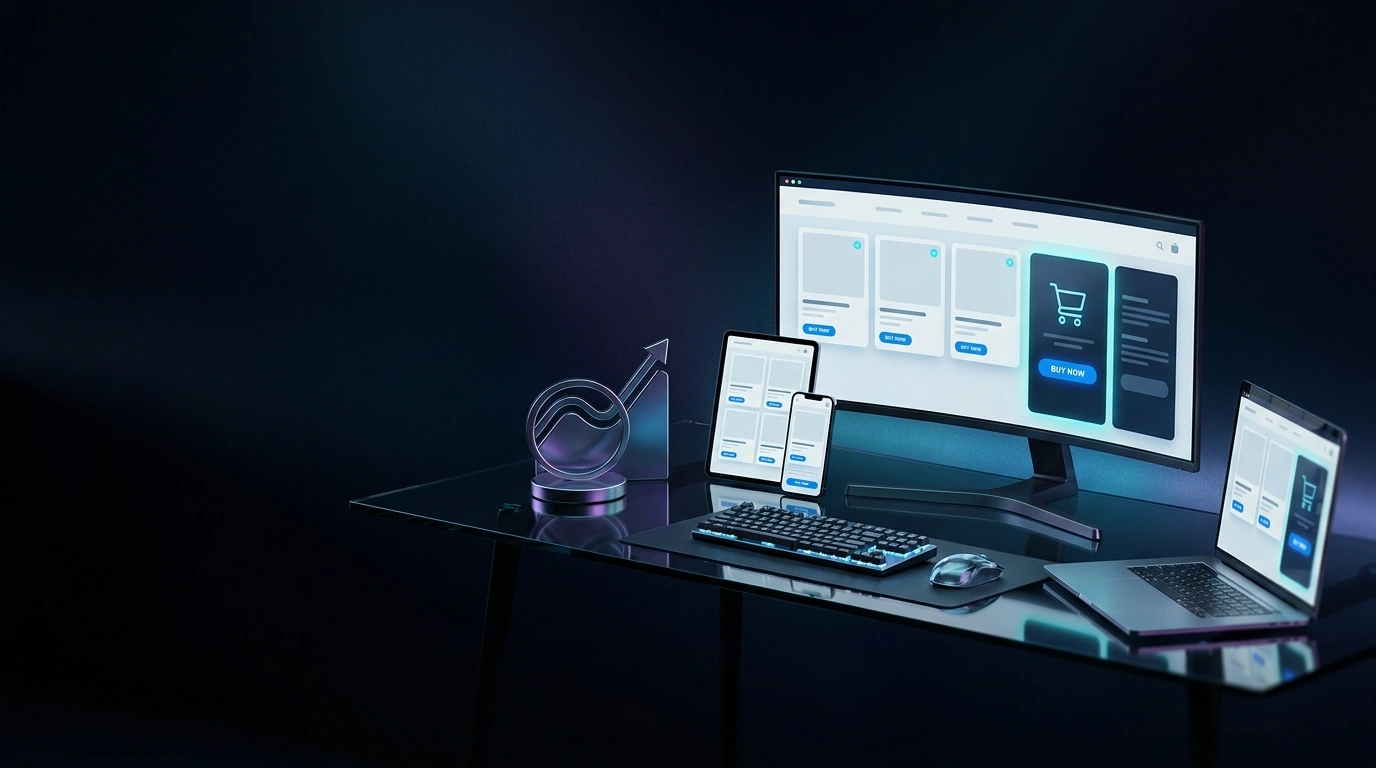
- Responsive design: Seamless shopping experiences across desktop, tablet, and mobile
- eCommerce website redesign: Updating outdated stores with modern layouts and faster checkout
- Development and integrations: Secure checkout, payment gateways, shipping systems, and CRM tools
- Performance and security optimization: Speed improvements, security monitoring, and reliable uptime
- Ongoing maintenance and support: Product updates, bug fixes, and continuous improvement
Projects typically take between two and six weeks depending on catalog size and feature complexity.
How Softlogics LLC Helps Businesses Build High-Converting eCommerce Stores
Softlogics LLC is a full-service IT and digital solutions company based in Houston, Texas. The team works with businesses across the US and internationally to design, build, and grow high-performing online stores.
What makes Softlogics LLC different is the breadth of in-house expertise. Rather than outsourcing parts of a project, the team covers every layer of a successful eCommerce business under one roof.
Services that directly support eCommerce growth include:
- Web Design and Development: Clean, scalable websites built for performance and conversion
- UI/UX Design: Research-backed interface design that makes shopping intuitive and enjoyable
- Graphic Design and Branding: Visual identity work that builds brand recognition and customer trust
- Digital Marketing: SEO, PPC, and social media strategies that drive targeted traffic to your store
- Website Maintenance: Ongoing technical support to keep your store fast, secure, and up to date
- Shopify and eCommerce Development: Platform-specific expertise for Shopify and custom eCommerce builds
- Custom Software Development: Tailored back-end solutions for businesses with complex operational needs
- Mobile App Development: eCommerce mobile apps that extend your store’s reach to app users
This combination means Softlogics LLC can help businesses not just build a store, but grow it over time through better visibility, stronger branding, and smarter marketing.
Real-World Scenarios and Business Use Cases
Understanding how eCommerce design improvements apply in practice helps clarify where the real opportunities are.
Scenario 1: A fashion brand losing mobile traffic
A clothing retailer drives strong traffic through Instagram but sees high bounce rates on mobile. The issue is a slow-loading, hard-to-navigate mobile store. After a responsive redesign and mobile checkout overhaul, session duration increases and cart abandonment drops.
Scenario 2: A beauty brand with low product page conversions
Customers add products to their cart but rarely complete purchases. An audit reveals vague product descriptions, no customer reviews, and confusing shipping information. Adding social proof, clear return policies, and a cleaner product page layout improves conversion rates.
Scenario 3: A B2B supplier launching online sales
A company that previously sold only through direct sales wants to add an eCommerce channel. A custom eCommerce store with catalog management, account-based pricing, and integrated CRM tools allows them to scale their sales without adding headcount.
Scenario 4: A small business migrating from WooCommerce to Shopify
A growing store outgrows its self-hosted WooCommerce setup. Migrating to Shopify with a custom theme and optimized product structure reduces technical maintenance time and improves store speed.
Each of these situations requires a different combination of design, development, and strategy expertise, exactly what a full-service partner like Softlogics LLC provides.
How Do Digital Marketing and SEO Support eCommerce Growth?
Building a great store is step one. Getting targeted traffic to that store is step two. Without a digital marketing and SEO strategy, even the best-designed eCommerce website will struggle to generate consistent sales.
Search engine optimization for eCommerce covers:
- Keyword research: Identifying the terms your target customers search for
- On-page SEO: Optimizing product titles, descriptions, meta data, and URL structures
- Technical SEO: Site speed, crawlability, structured data, and mobile performance
- Content marketing: Blog posts, buying guides, and educational content that attract organic traffic
- Link building: Earning backlinks from relevant, authoritative websites
Paid advertising (PPC) through Google Shopping, Meta Ads, and other platforms complements organic SEO by driving immediate, targeted traffic to specific products or promotions.
According to Google, 49% of shoppers use Google to discover or find new products. That means showing up in search results, whether through SEO or paid ads, is critical for eCommerce growth.
Softlogics LLC offers integrated digital marketing services including SEO, PPC, and social media marketing, all connected to the broader goal of growing your eCommerce store.
Frequently Asked Questions About eCommerce Website Design
What is eCommerce website design and why does it matter?
eCommerce website design is the process of planning, creating, and optimizing an online store’s visual layout, structure, and functionality. It matters because design directly affects how users interact with your store, how much they trust your brand, and whether they complete a purchase. Poor design leads to high bounce rates and low conversions.
How long does it take to design and build an eCommerce website?
Timelines vary based on the size and complexity of the project. A custom eCommerce website with Softlogics LLC typically takes between two and six weeks. Shopify store builds are often completed in one to three weeks. Larger projects with complex integrations or large product catalogs may take longer.
What platform should I use for my eCommerce store: Shopify or WooCommerce?
Shopify is generally better for businesses that want a fast, reliable launch with less technical overhead. WooCommerce is better for businesses that need maximum flexibility and already have WordPress experience. The best choice depends on your technical resources, budget, and long-term scalability needs.
How much does professional eCommerce web design cost?
Cost depends on the scope of the project, including the number of pages, custom features, integrations, and the platform used. Custom eCommerce projects vary widely. Softlogics LLC offers tailored solutions for businesses at different stages. Contact the team for a free consultation and project estimate.
What makes a high-converting eCommerce website?
High-converting eCommerce websites share common traits: fast load times, mobile-responsive design, intuitive navigation, strong product pages with clear images and descriptions, visible social proof, and a frictionless checkout process. Every design decision should reduce hesitation and make it easier for visitors to buy.
Can Softlogics LLC redesign my existing eCommerce store?
Yes. Softlogics LLC offers eCommerce website redesign services for both Shopify stores and custom-built eCommerce sites. The team updates outdated designs, improves site speed, restructures navigation, and optimizes checkout flows to increase conversions.
Does my eCommerce store need ongoing maintenance after launch?
Yes. eCommerce stores require regular maintenance to stay fast, secure, and functional. This includes product updates, security patches, performance monitoring, and bug fixes. Softlogics LLC provides ongoing maintenance and support packages to keep your store running at its best.
Ready to Build an eCommerce Store That Actually Converts?
eCommerce website design is one of the highest-leverage investments a business can make. The difference between a store that converts at 1% and one that converts at 3% is not luck. It is design, performance, trust, and strategy working together.
If your current store is not delivering the results you expect, or you are building from scratch and want to get it right the first time, Softlogics LLC has the expertise to help.
The Softlogics team handles everything from initial design and development to ongoing marketing and maintenance, so you get a complete solution, not just a website.
Work with Softlogics LLC to build a high-converting eCommerce store. Get a free consultation or contact the Softlogics team to discuss your project.